
Do You Need Dedicated WiFi for a FIFA Watch Party? A Practical Guide for Event Organizers
If you are planning a large FIFA watch party, one of the most important questions is not just how big the screen should be or how many bars you need. It is whether your venue can support the digital demands of thousands of fans all trying to connect at once.
For a major watch party, WiFi is no longer just a convenience. It supports guest access, mobile ordering, sponsor activations, cashless payments, staffing, security, and live event engagement. A crowded match day environment behaves much more like a stadium than a normal public venue, which means standard house internet often is not enough.
Do I really need a dedicated WiFi network for a FIFA watch party?
In most large event cases, yes.
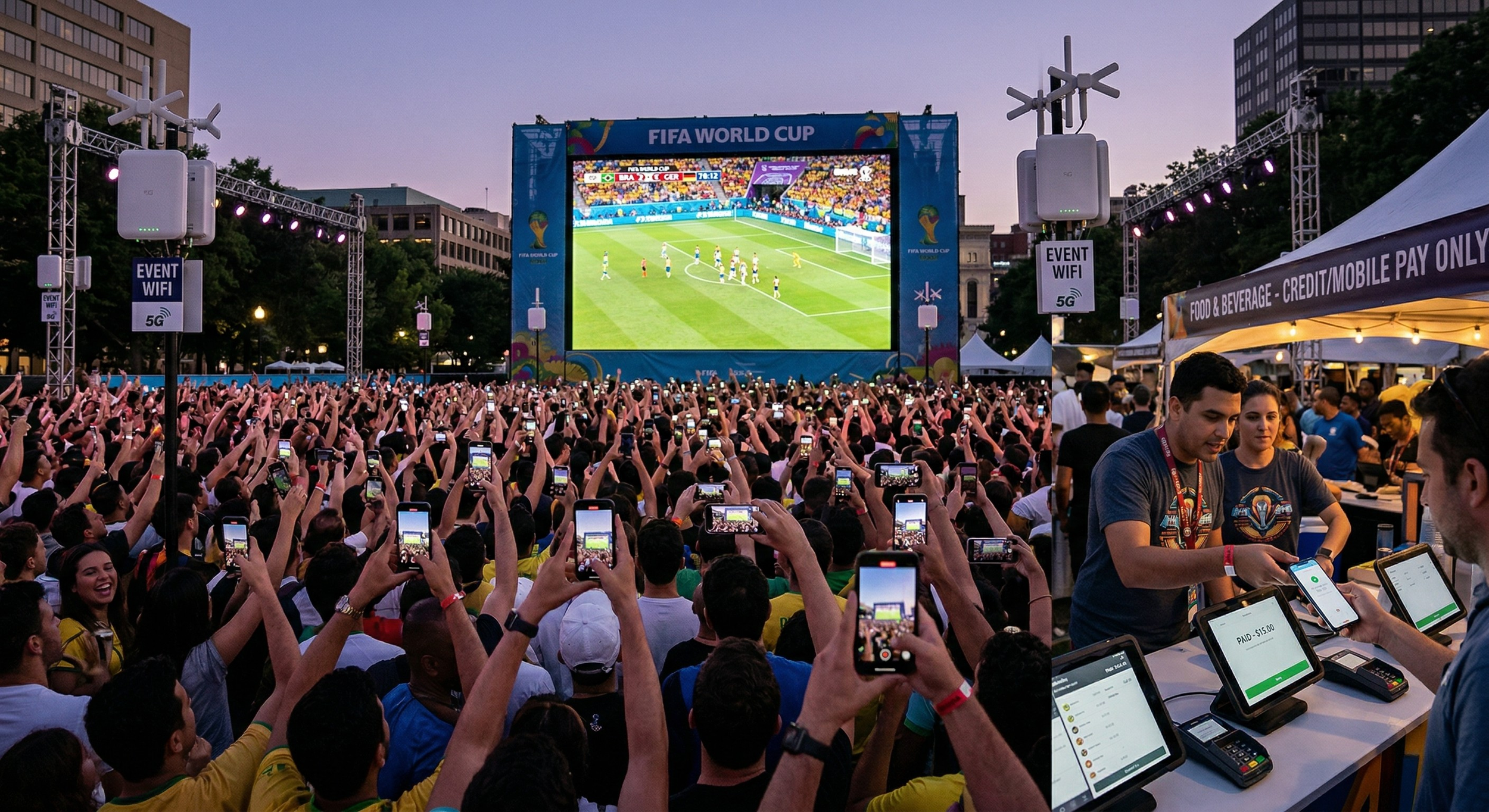
A FIFA watch party creates a predictable surge in demand. Guests arrive in a short time window, connect to WiFi at the same time, upload photos and videos during big moments, and expect mobile payments and event apps to work without delays. That traffic pattern is dense, bursty, and operationally important. Standard venue WiFi is usually designed for everyday usage, not for thousands of simultaneous users.
A dedicated Wireless Internet setup gives organizers more control over performance, coverage, and reliability. It also reduces the risk of slow logins, dead zones, payment failures, and overloaded networks during the busiest parts of the event.
What happens if I rely on the venue’s existing WiFi?
The biggest risk is that the network fails at the exact moment your event depends on it most.
When a crowd tries to connect all at once, weak network design shows up fast. Guests struggle to get online. POS systems slow down. Staff devices compete with public traffic. Sponsor activations underperform. If fans cannot connect, order, pay, or share the experience, the event feels less organized and less premium.
That is why experienced event teams treat connectivity as part of the event infrastructure, not as a background utility.
How much WiFi capacity does a large FIFA watch party need?
The answer depends on attendance, venue layout, device density, and how digital your event experience is.
A serious event design process should estimate how many attendees will connect, how many devices they will bring, what applications they will use, and where usage will spike. A crowd watching a FIFA match will usually create heavy demand at ingress, kickoff, halftime, goals, and full time. That means the network has to be designed for peak simultaneous usage, not just average usage.
This is where large area wifi planning matters. If your event covers plazas, parking areas, hospitality tents, food courts, entry lanes, and sponsor zones, coverage alone is not enough. Capacity planning, channel strategy, antenna placement, and backhaul resilience all matter.
Do I need a wireless site survey before the event?
Yes, and for a large event, a wireless site survey should be considered essential.
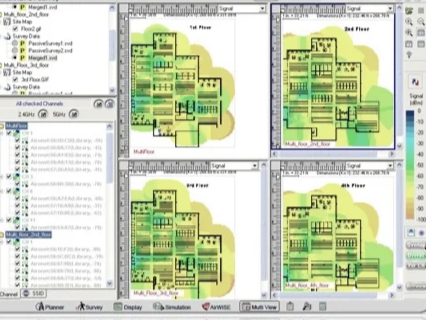
A wireless site survey helps determine where access points should go, where users will cluster, how far coverage needs to extend, and where interference or congestion is likely to occur. For an outdoor or mixed use event footprint, this is critical because crowd flow, staging, lighting, barriers, screens, and vendor buildouts can all affect wireless performance.
For FIFA watch parties, the site survey should focus on real event conditions: entry points, concession queues, hospitality zones, sponsor activations, security positions, premium seating, and likely dwell areas before and during the match.
What is the best WiFi setup for a FIFA watch party?
The best setup is usually a segmented network, not a single public WiFi system.
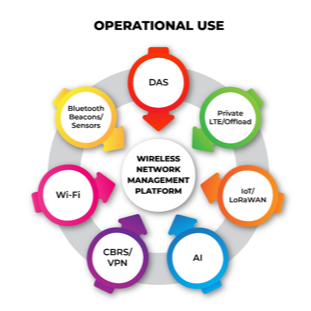
A strong event architecture typically includes a guest WiFi network for fan access and engagement, a separate operational network for POS, scanners, staffing, and security, and a production or premium layer for media, sponsors, VIP areas, or livestream support.
This matters because the business risk is different for each kind of traffic. Public browsing can tolerate some slowdown. Payment systems, cameras, ticketing, and staff communications cannot. Separating traffic helps protect the most critical functions during peak demand.
Should I use temporary wireless for events or invest in permanent wifi?
That depends on whether the venue will host more large events in the future.
Temporary wireless for events makes sense when the FIFA watch party is a one time activation, a short tournament series, or a pop up environment without long term digital infrastructure needs. It gives organizers flexibility and can be designed specifically for the event footprint.
Permanent wifi makes more sense when the venue regularly hosts concerts, festivals, fan zones, sports screenings, or other large public gatherings. In that case, the network becomes a reusable venue asset that supports future events, improves venue operations, and creates long term sponsorship and telecom opportunities.
For many venues, the smartest move is to build an event grade network that starts as a temporary deployment but can evolve into permanent wifi.
Can a custom event network pay for itself?
In many cases, YES!
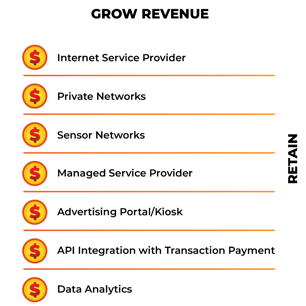
A dedicated network can function as a cost recovery network when it is designed with monetization in mind. Organizers can recover costs through sponsored splash pages, branded login journeys, premium access tiers, VIP connectivity packages, telecom partnerships, and measurable digital sponsor inventory.
The value is not only in direct sponsorship revenue. Better WiFi can also reduce failed transactions, improve concession throughput, support higher mobile order conversion, and protect against lost sales during peak traffic windows. That means the network can generate both new revenue and avoided losses.
How can WiFi help attract sponsors for a FIFA watch party?
Sponsors increasingly want measurable outcomes, not just logo placement.
A custom WiFi network gives organizers digital inventory they can sell with real performance data. A sponsor can own the login page, present the free WiFi experience, offer a halftime promotion, or sponsor a premium access tier. Organizers can then report on sessions, clicks, offers redeemed, and engagement around branded zones.
That makes sponsorship more accountable and more valuable. Instead of selling generic exposure, you are selling authenticated reach and measurable fan interaction.
What should event organizers know about data privacy and guest WiFi?
The key point is that building your own WiFi network does not automatically give you unlimited rights to use attendee data.
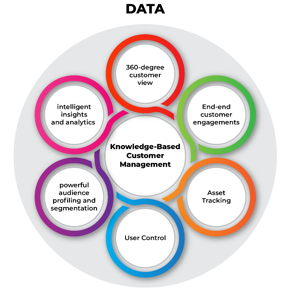
If you want to collect first party data through guest WiFi, the collection model has to be transparent, purpose specific, and permission based. Best practice is to separate network access from optional consent for organizer marketing, SMS, sponsor offers, or personalized experiences. That creates a cleaner, more compliant audience strategy and reduces privacy risk.
The strongest event programs use WiFi to build consented first party relationships, not just raw device counts.
Final takeaway: what is the smartest connectivity strategy for a FIFA watch party?
The smartest strategy is to treat WiFi as part of the event business model.
A FIFA watch party needs more than internet access. It needs reliable Wireless Internet for fans, protected operational connectivity for staff and systems, a scalable large area wifi design for dense crowds, and a deployment plan built on a real wireless site survey and RF site survey.
Whether you choose temporary wireless for events or invest in permanent wifi, the goal is the same: deliver a better fan experience, protect event operations, create sponsor value, and build a network that supports revenue instead of becoming a point of failure.
Schedule a Free Assessment
Need WiFi for events or temporary productions