
Temporary Wireless for Events: Reliable Event WiFi That Supports Guests, Vendors, Production, and Revenue
Event connectivity is no longer a nice-to-have. For conferences, festivals, trade shows, fashion shows, pop-up shops, hybrid meetings, product launches, and outdoor activations, wireless internet is part of the event infrastructure.
Your network may need to support registration, ticket scanning, point-of-sale systems, livestreaming, speaker presentations, production teams, security devices, exhibitors, vendors, VIP areas, staff communications, press rooms, and guest access — all at the same time.
That is why temporary Wi-Fi for events should be designed as a purpose-built network, not treated as a few hotspots or an overloaded venue connection. At SLICE, event WiFi is planned around the real needs of the event: coverage, capacity, bandwidth, security, uptime, branding, and support.
The right temporary wireless design separates user groups, protects mission-critical systems, manages bandwidth, supports branded guest access, and can even help create a cost recovery network through sponsorships, exhibitor packages, premium connectivity, or WiFi portal advertising.
Why temporary event WiFi is better than relying only on venue WiFi
Many venues already have permanent WiFi, but that infrastructure is often designed for normal day-to-day building use. Events are different. They create short-term, high-density demand, often with hundreds or thousands of devices connecting in concentrated areas.
A professional event WiFi deployment can supplement or replace the venue network with a system designed specifically for the event environment.
That may include:
Dedicated or managed internet backhaul
Temporary internet, Starlink, cellular, microwave, or other connectivity options
Access points placed for registration areas, stages, exhibit halls, outdoor zones, and high-density crowds
Separate networks for guests, staff, vendors, speakers, VIPs, production, and devices
Bandwidth shaping and priority rules
Captive portals, branded login pages, vouchers, and access codes
Live monitoring and on-site technical support
Failover using multiple uplinks where uptime is critical
The goal is not simply to “get WiFi.” The goal is to deliver a stable, managed network that can support the event’s operations and guest experience from load-in through teardown.
How temporary wireless for events works
A professional temporary WiFi deployment usually includes five core components: planning, internet backhaul, network design, WiFi access, and live support.
1. Site survey and event network planning
A reliable event network starts with planning. Before access points are installed or bandwidth is ordered, SLICE can perform a wireless site survey to understand the venue, signal environment, interference, building materials, cabling paths, and the areas that matter most.
For larger or more complex events, an engineering plan can help define coverage zones, access point placement, bandwidth requirements, cabling routes, and operational priorities before the event begins.
Important planning questions include:
How many attendees are expected?
How many concurrent devices will be online?
Will the event include livestreaming, press access, or production traffic?
Are vendors using POS systems?
Are there outdoor areas, tents, stages, or temporary structures?
Does the venue already have internet service?
Which systems need priority access?
Will sponsors, exhibitors, or VIPs need dedicated access?
High-density areas such as entrances, registration desks, keynote rooms, sponsor zones, food courts, exhibit halls, backstage areas, and press rooms should be identified early so the network can be designed around real usage.
2. Internet backhaul and temporary bandwidth
Backhaul is how internet service reaches the event site. Depending on the venue, timeline, and bandwidth requirements, SLICE can help source and deploy connectivity options such as venue internet, temporary bandwidth, cellular, Starlink, microwave, or other managed uplinks.
For smaller events or remote locations, temporary internet and Starlink rentals may be a practical way to get online quickly. For small teams, roadshows, and lightweight connectivity needs, mobile Wi-Fi hotspots may be enough.
For larger events, temporary internet should be engineered more carefully. Registration, POS, livestreaming, security, and production systems should not depend on a single best-effort connection when uptime matters.
3. Core network, security, and network slicing
The core network is where policy is enforced. It includes the router, gateway, firewall, DHCP, DNS, VLANs, failover rules, bandwidth shaping, captive portal logic, and user access controls.
This is where SLICE’s WiSNET platform becomes especially valuable. WiSNET is designed to “slice” bandwidth and network access by user, group, device, or network. That means a single event network can support multiple experiences without giving every user the same level of access.
For example:
Staff can receive private operational access.
Vendors can receive POS-friendly connectivity.
Speakers can receive priority presentation access.
Production teams can receive higher-bandwidth connections.
Sponsors can receive branded guest portal placements.
Guests can receive free, limited, or premium WiFi access.
This structure helps protect mission-critical systems while still giving guests and exhibitors the connectivity they need.
4. Access points, installation, and WiFi coverage
The WiFi access layer includes access points, switches, antennas, cabling, mounting hardware, power, masts, truss, and other temporary infrastructure.
High-density event WiFi is not just a matter of adding more access points. Each access point has finite airtime, and placement matters. Poor placement can create interference, dead zones, roaming issues, and overloaded channels.
SLICE’s installation services help ensure hardware is installed, configured, tested, and positioned correctly for the venue and event layout. For events with changing floor plans, temporary structures, outdoor areas, or dense crowds, proper setup can make the difference between a smooth event and constant connectivity complaints.
5. Monitoring, support, and teardown
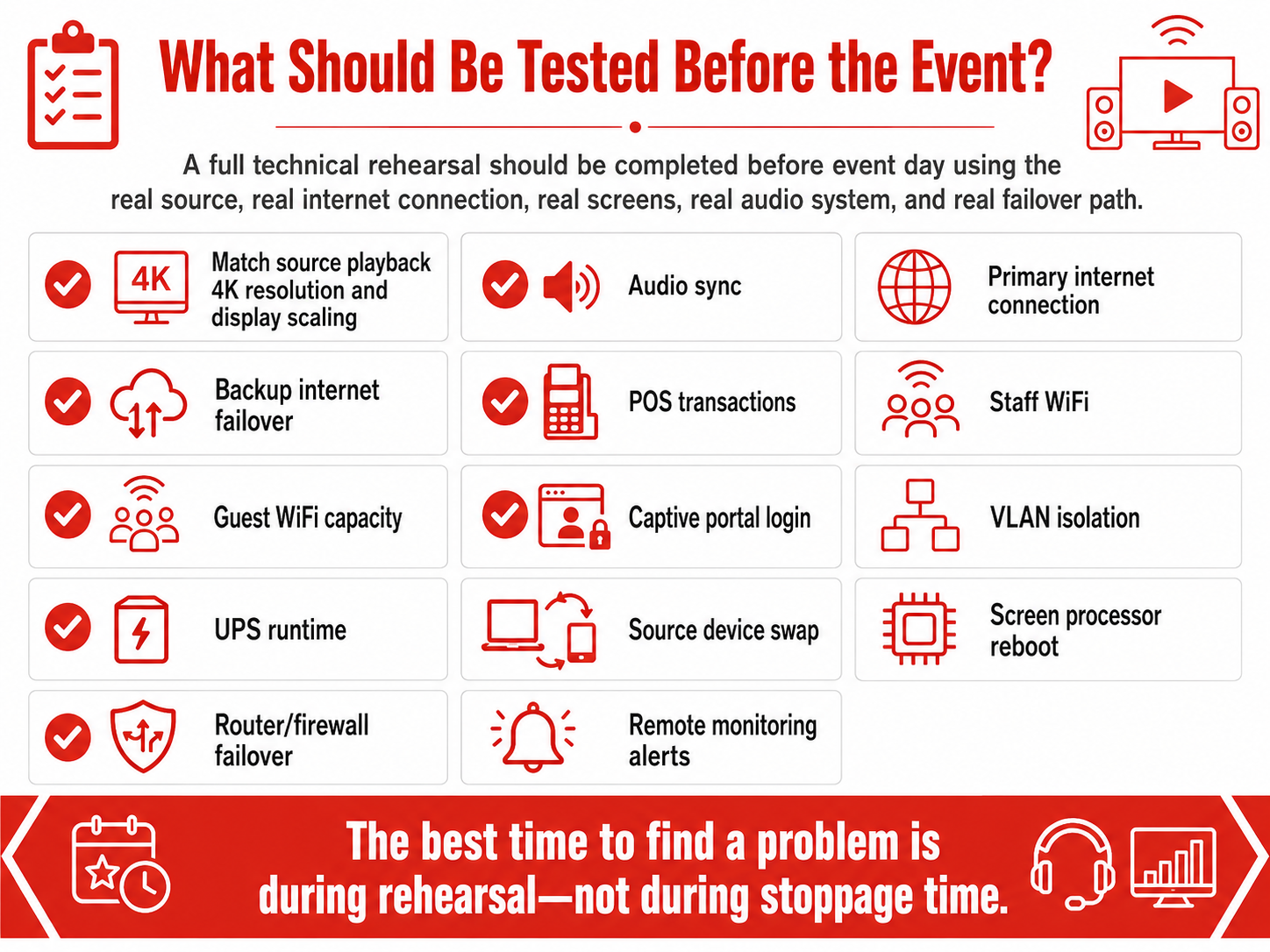
A professional event network should be tested before doors open, monitored during the event, and removed cleanly afterward.
SLICE’s network operations support can help monitor network components and services during the event, identify outages or anomalies, and keep operations running.
On-site support is especially important when the event depends on:
POS transactions
Ticketing and registration
Livestreaming
Press access
Speaker presentations
Production workflows
VIP or executive areas
Vendor and exhibitor connectivity
The best event WiFi is quiet. Guests connect easily. Staff systems work. Vendors process payments. Production teams have the bandwidth they need. Network engineers can see what is happening in real time and resolve issues before they become visible to attendees.
What does temporary WiFi cost?
Temporary WiFi pricing depends on the event size, risk level, bandwidth needs, density, labor, venue complexity, equipment requirements, and support expectations.
As a general planning range:
Small events under 100 guests may range from $1,000 to $3,000.
Events with 100 to 500 guests may range from $3,000 to $10,000.
Large, complex, or high-density events may range from $10,000 to $50,000 or more.
Smaller options such as mobile hotspots, portable WiFi kits, or temporary internet service may start lower. However, a hotspot or kit is not the same as a fully engineered event WiFi deployment with RF planning, multiple access points, VLANs, failover, branded portals, monitoring, and on-site support.
The biggest cost drivers usually include:
Required bandwidth speed
Number of concurrent devices
Venue size and layout
Indoor versus outdoor coverage
Cabling, mounting, power, and equipment needs
Dedicated versus shared bandwidth
Cellular, satellite, or temporary bandwidth costs
Number of SSIDs, VLANs, and user groups
Portal, voucher, or sponsorship requirements
On-site engineering and support hours
Venue fees for drops, labor, SSIDs, or add-ons
A small workshop may only need 50 to 100 Mbps. A large conference or trade show may need 1 to 5 Gbps. Stadium-scale or festival-scale environments may require much more, especially when livestreaming, media, production, vendors, and guest access are all running at once.
Can temporary WiFi become a cost recovery network?
Yes. A well-designed temporary wireless deployment can become a cost recovery network when access is packaged strategically.
SLICE’s FREEMIUM™ Wi-Fi model is built around using free WiFi to improve the guest experience, collect data, and generate revenue. For events, this can mean creating access tiers, sponsor placements, premium connectivity, or exhibitor packages.
Common cost recovery options include:
Sponsored captive portals
Branded guest login pages
Premium attendee WiFi
VIP access codes
Exhibitor internet packages
Per-booth vendor vouchers
Dedicated wired drops
Guaranteed bandwidth packages
Press or production access tiers
Advertising or sponsor messaging on the login experience
SLICE also offers branding and sponsor portals for events that want the WiFi login experience to become part of the marketing strategy. A branded portal can promote sponsors, collect opt-ins, support social engagement, share event information, and provide analytics after the event.
The key is to protect operational traffic first. Registration, POS, security, speaker systems, livestreaming, and production should never be compromised to create revenue. Network slicing allows different user groups to share one infrastructure while receiving different bandwidth, security, and access policies.
What does a successful event WiFi deployment look like?
A successful event WiFi deployment is stable, controlled, and easy to use. Attendees can connect without frustration. Staff and vendors can work without worrying about the network. Production teams have dependable bandwidth. Sponsors get visibility. Event organizers get a smoother experience and better data.
The strongest deployments often include:
A pre-event wireless site survey
A clear engineering plan
Properly sourced temporary internet or bandwidth
Separate SSIDs and VLANs for user groups
Bandwidth shaping and QoS policies
WiSNET network slicing and access control
Branded portals, vouchers, or sponsor login pages
Redundant uplinks where needed
Professional installation and access point placement
On-site testing before the event opens
Live network monitoring during the event
Spare equipment and rapid troubleshooting
Post-event reporting and portal analytics
Temporary wireless is not just internet access. It is event infrastructure. When designed correctly, it supports operations, improves the attendee experience, protects critical systems, and creates opportunities for sponsorship, premium access, and cost recovery.

Plan your event WiFi with SLICE
Whether you are planning a conference, festival, fashion show, trade show, product launch, pop-up shop, outdoor activation, or high-density gathering, the smartest first step is a professional network plan.
SLICE provides temporary Wi-Fi for events, temporary internet and Starlink rentals, mobile Wi-Fi hotspots, FREEMIUM™ Wi-Fi, WiSNET network slicing, and branded sponsor portals to help events stay connected, controlled, and ready for the demands of live environments.
To start planning your event network, contact SLICE or request a quote for your upcoming event.